
Saint David of Gareja
A single stone, brought from Jerusalem as a sign of humility, gave spiritual life back to the rocks of Gareja. Where only heat and solitude reigned, David's tears and prayer made monasteries spring up, and to this day the desert carries the echo of that one man's faith.
- Feast
- Thursday after the Ascension
Saint David of Gareja, one of the greatest Christian ascetics of the 6th century, an outstanding father of Georgian monasticism and one of the Thirteen Assyrian Fathers, holds a special place in the history of the Church of Georgia. His life is closely bound up with the strengthening of monastic life in Georgia, with the forming of the spiritual tradition of Mtatsminda in Tbilisi and with the founding of the great monastic centre of David Gareja. Over the centuries his name became for Georgian Christians a symbol of the ascetic life, of humility, prayer and complete trust in God.
Saint David came to Georgia in the 6th century together with his spiritual teacher, Saint John of Zedazeni, and the other Assyrian fathers. Their coming to Georgia became one of the most important events in the history of the Georgian Church. The fathers settled in different regions, founded monasteries, strengthened monastic life and called the people to faithfulness in the Christian faith.
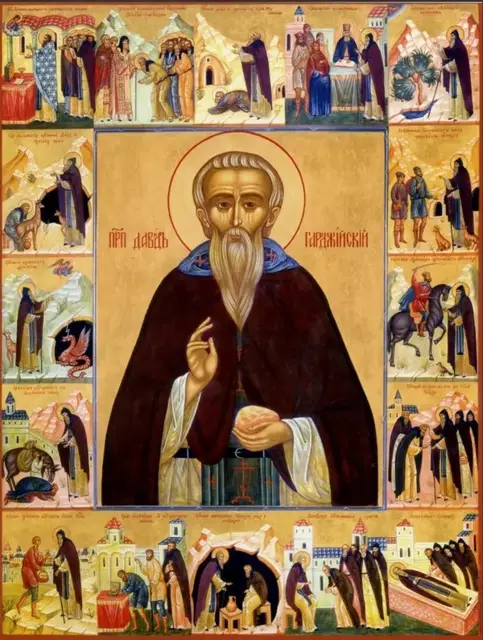
Saint David first chose a solitary place near Tbilisi, on Mtatsminda. He led a strict ascetic life, fasted and prayed without ceasing. According to tradition, on certain days he came down into the city and preached the teaching of Christ to the people. Little by little there gathered around him those who sought spiritual counsel and comfort.
It is with the name of Saint David that the centuries-old spiritual tradition of Mamadaviti in Tbilisi is connected. Mtatsminda, where he lived and prayed, later became one of the most important Christian places of Tbilisi, and the name “Mamadaviti” has preserved the saint's memory through the centuries.
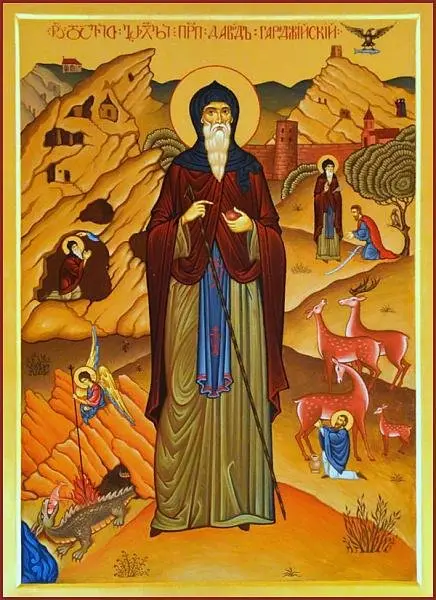
During Saint David's time in Tbilisi one of the heaviest trials of his life took place. He was slandered and unjustly accused of a grave sin. According to the tradition told in the saint's Life, when the woman who accused him was brought before him, Saint David begged God to make his innocence known. By a miracle the truth was revealed, and the saint's innocence became plain to all.
Although his innocence had been made known, this event weighed heavily on Saint David. He resolved to go still further from the noise of the city and from human glory. Together with his faithful disciple, Saint Lucian, he left Tbilisi and set out for the desert of Gareja, a deserted and harsh region in eastern Georgia.
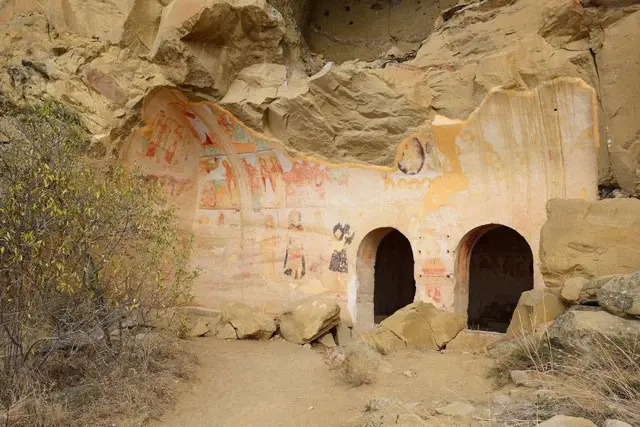
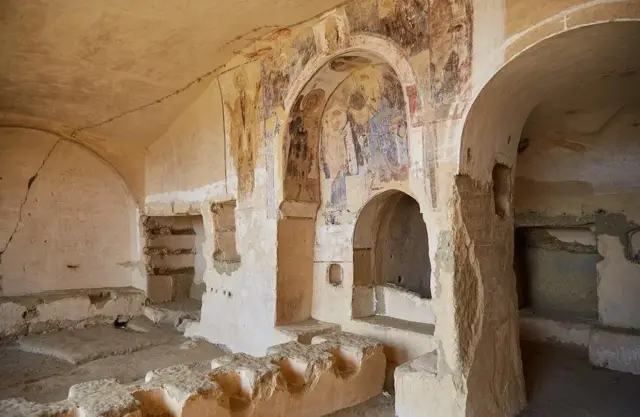
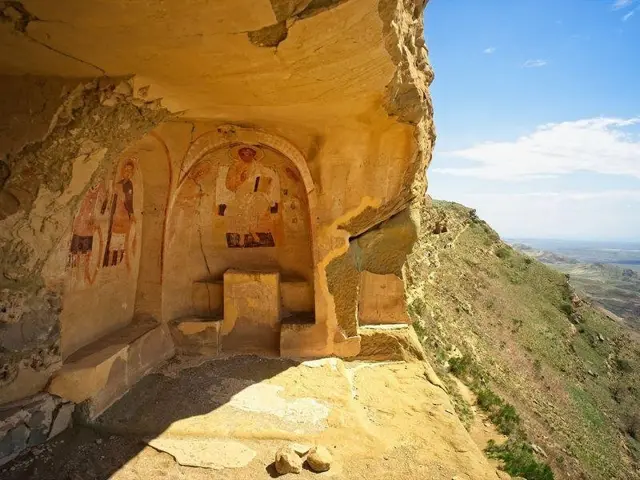
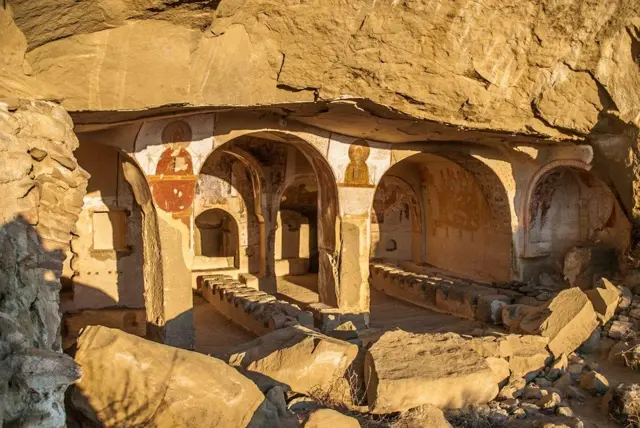
In Gareja their life was extremely hard. In that half-desert, rocky country there was almost no water or food. They took shelter in natural caves, spent their days in prayer, fasting and labour, and entrusted themselves wholly to the will of God.
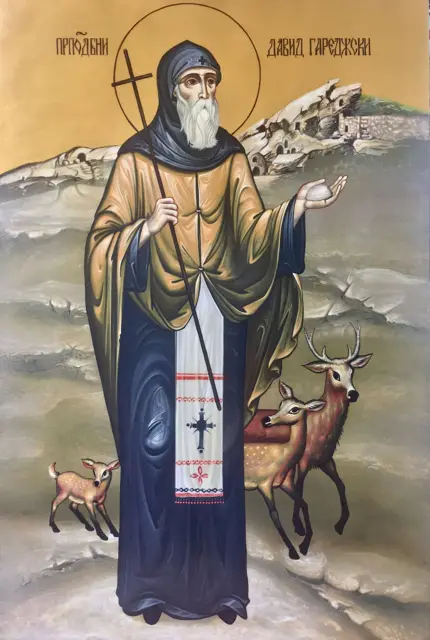
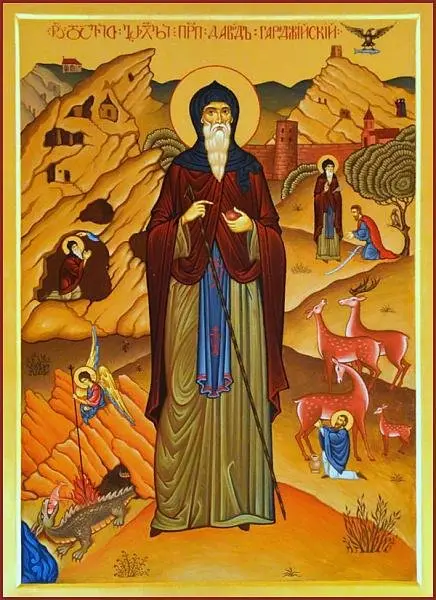
One of the well-known traditions connected with the life of Saint David and Lucian concerns the deer. According to tradition, by God's providence wild deer came to them, and Saint Lucian was nourished by their milk. This story has remained in Georgian Church tradition as one of the best-known episodes of the saints' complete trust in God and of their miraculous feeding in the wilderness.
In time the report of the holiness of David and Lucian spread. Others who desired the monastic life also came to them in the wilderness. Around Saint David a brotherhood gradually took shape, and the foundation was laid of the Lavra of David Gareja. Cells and chapels were made in the caves, and the uninhabited desert was transformed into a great centre of monastic life.
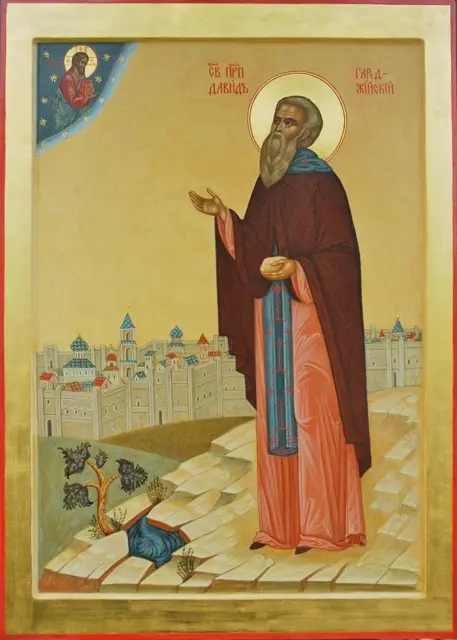
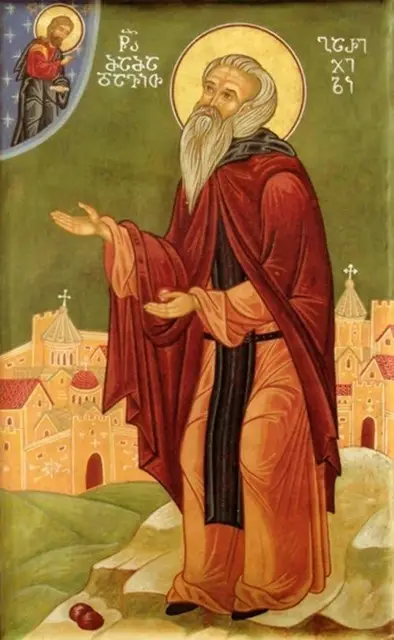
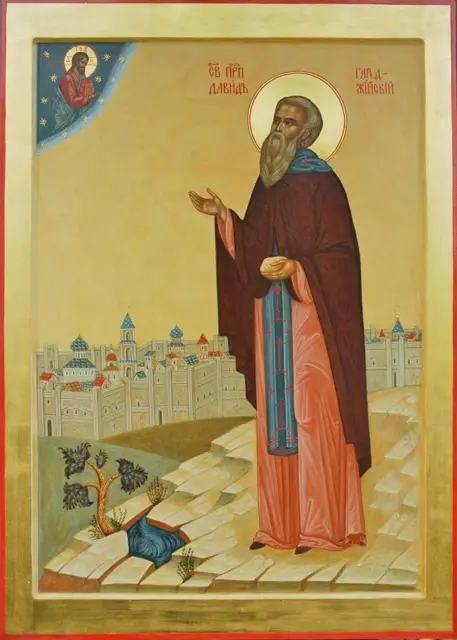
A special place in the life of Saint David belongs to his pilgrimage to the Holy Land. He wished to go to Jerusalem and venerate the places connected with the earthly life of the Saviour. According to Church tradition, when he drew near the holy city and saw Jerusalem from afar, he was overcome by deep humility. He counted himself unworthy to enter the land where Christ walked, preached, suffered, was crucified and rose again.
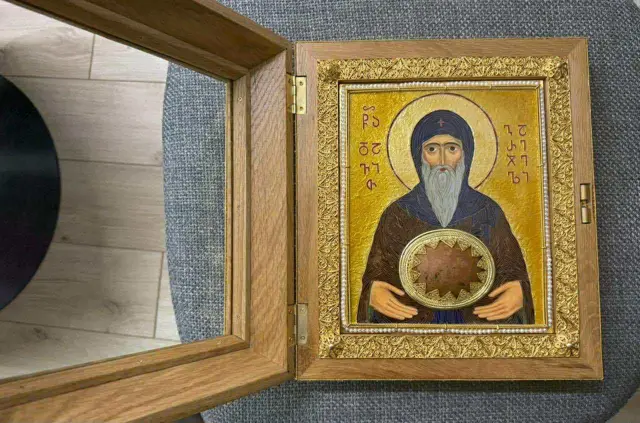
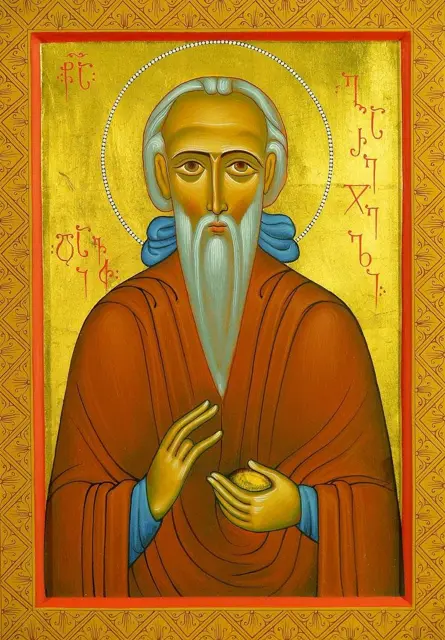
Instead of entering the city, Saint David took three stones from the ground as a blessing of the Holy Land and turned back. According to tradition, that same night it was made known by God to the Patriarch of Jerusalem that a man of God from Georgia had carried away with him the spiritual grace of Jerusalem. Those who were sent after him took two of the stones from Saint David and allowed him to take one stone to Georgia.
This stone later became one of the special holy relics connected with the name of Saint David of Gareja. The episode of Jerusalem clearly expresses the essence of the saint's life: despite his great spiritual labour, he did not count himself worthy even to enter the holy city.
After his return to Gareja Saint David continued his ascetic life. He taught his disciples prayer, obedience, humility and labour. The monastic movement he had begun gradually spread, and new monasteries and hermitages arose in the desert of Gareja.
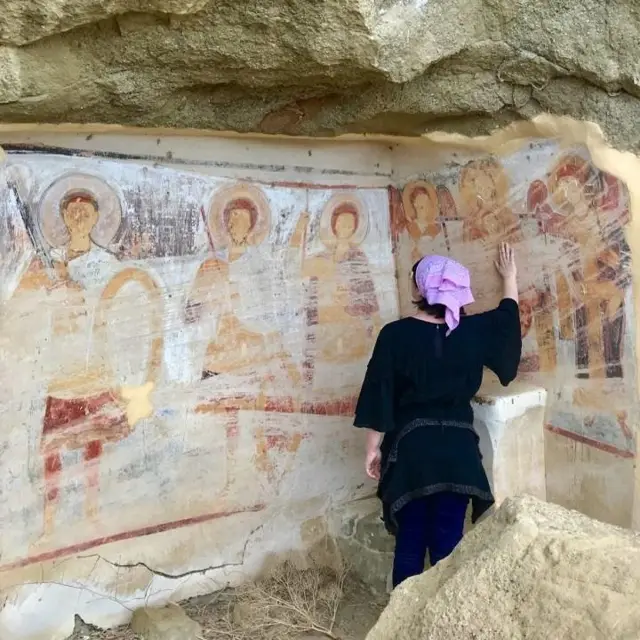
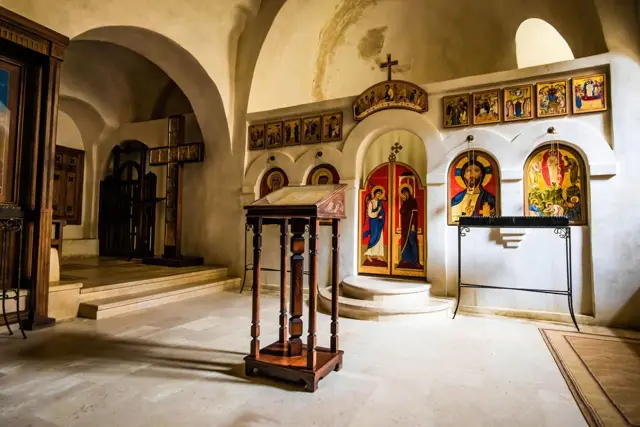
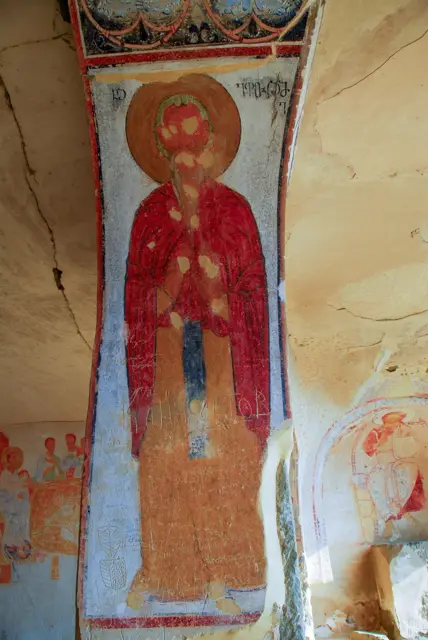
In later centuries the monastic complex of David Gareja became one of the greatest spiritual, cultural and educational centres of Georgia. Monks, scribes and artists worked here; manuscripts were produced and unique wall paintings created. Thus the small ascetic life begun by Saint David in the wilderness became, over the centuries, a great home of Georgian Christian culture.
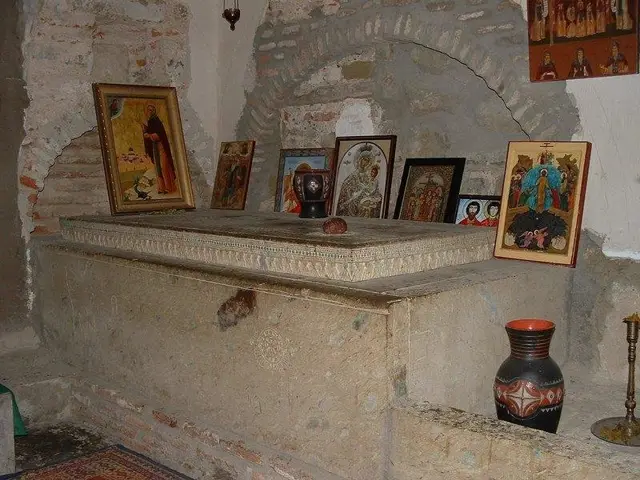
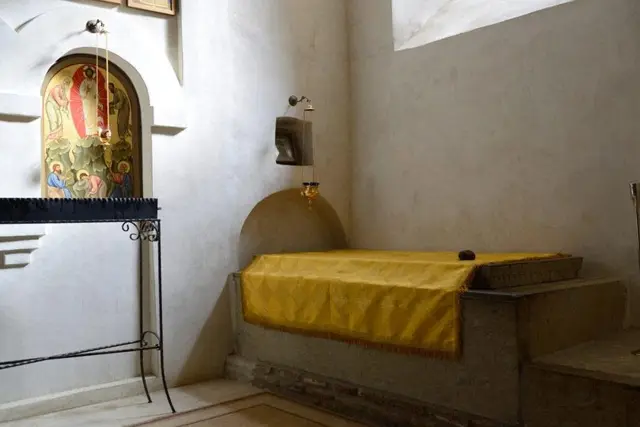
Saint David of Gareja reposed in the 6th century. His holy relics rest in the Lavra of David Gareja, which he founded. Over the centuries his grave became a place of special veneration, and the faithful still go there today to pray and to ask for the saint's intercession.
The Georgian Orthodox Church celebrates the memory of Saint David in a special way on the first Thursday after the Ascension. This feast is known as Mamadavitoba and, since it depends on the date of Easter, falls on a different calendar day each year.
Today Saint David of Gareja remains one of the greatest fathers of Georgian monasticism. From Tbilisi to the desert of Gareja, from Mamadaviti to the Lavra of David Gareja, the trace of his life is still alive in the Christian history of Georgia. His life showed that spiritual strength can be born in the silence of the desert, in prayer, fasting, humility and complete trust in God.
The spiritual light kindled by Saint David in Gareja has not gone out through the centuries. His life reminds us that true greatness lies not in human glory, but in humility, prayer, self-denial and closeness to God. That is why Saint David of Gareja remains to this day one of the most venerated fathers of the Church of Georgia and a great spiritual intercessor for the Georgian people.
Hymns of Saint David of Gareja
🎵 Troparion
ოფლითა მით მოღვაწებისათა, განზავებულნი ცრემლთა წყარონი ძღუნად მიუპყრენ აწ სავედრებელად მეუფესა, და ითხოვე აღორძინებაჲ მისი, რამეთუ ცრემლით სთესე, და სიხარულით მოიმკენ ნაყოფნი უდაბნოსანი, ჰოი დავით, ბრწყინვალებაო სოფლისაო, და მეოხო სულთა ჩუენთაო.
🎵 Kontakion
შუამდინარით აღმოხედ ვარსკულავი ყოვლად-ბრწყინვალე, და მოიწიე უდაბნოდ გარესჯად და მიერითგან მოსლვითა შენითა, ვითარცა სამოთხე ნერგთაგან წმიდათა სცენდებიან, ნერგნი სიტყვიერნი, რომელთათვის ოხასა ნუ დააცადებ, დავით სანატრელო.